
"Long in"
53000 article(s) found

Introduction to the quality and taste of grinding scale by describing the flavor of coffee in Columbia Hope Manor.
Columbia Hope Manor Coffee Flavor description method Grinding scale quality; petiole 8-15 mm long; stipules broadly triangular, cone-shaped tip or awn tip born on the upper part of young branches, often pointed on old branches, 3-6 mm long. Cymes several clustered in leaf axils, each with 2-5 flowers, without a peduncle or with a very short peduncle; flowers fragrant, with
Description of taste and flavor of coffee beans produced in Colombian Hope Manor by variety treatment
Colombia hopes to describe the taste and flavor of the vineyard coffee beans produced by the variety treatment method. Colombia's suitable climate provides a real natural pasture for coffee. Coffee trees in Colombia are mainly cultivated in the Andes, on steep slopes about 1300 meters above sea level, where the annual temperature is about 18 degrees Celsius, annual rainfall is 2000 to 3000 millimeters, and latitude 1-1.

Introduction to the production areas of sweet Santa Rita Manor Coffee Grinding scale treatment
The suitable climate in Colombia provides a real natural pasture for coffee. Coffee trees in Colombia are mainly cultivated in the Andes, on steep slopes about 1300 meters above sea level, where the annual temperature is about 18 degrees Celsius, annual rainfall is 2000 to 3000 millimeters, latitude 1-11 15 north, longitude 72-78 west, and the specific range of elevation can exceed 2.000 meters. By

Planting Environment of Coffee species in Colombia
Species Morphology Editing Colombian Coffee Plant Morphology Colombian Coffee Plant Morphology (10 pieces) Colombian coffee is mainly small grain coffee. Plants are small trees or large shrubs, 5-8 m tall, usually much branched at base; old branches gray-white, nodes dilated, young branches glabrous, compressed. Leaves thinly leathery, ovate-lanceolate or lanceolate, 6-14 cm long, 3.5-5 cm wide, apex

The characteristics of Colombian coffee beans the price of Colombian coffee beans
The main varieties of Colombian coffee are small grains of coffee. Plants are small trees or large shrubs, 5-8 m tall, usually much branched at base; old branches gray-white, nodes dilated, young branches glabrous, compressed. Leaves thinly leathery, ovate-lanceolate or lanceolate, 6-14 cm long and 3.5-5 cm wide, tip long acuminate, acuminate part 10-15 mm long, base cuneate or slightly obtuse, rarely rounded, entire or

Sweet Santa Rita Manor, Colombia, the cultivation of boutique coffee beans, geographical location, climate, simple altitude.
The main varieties of Colombian coffee are small grains of coffee. Plants are small trees or large shrubs, 5-8 m tall, usually much branched at base; old branches gray-white, nodes dilated, young branches glabrous, compressed. Leaves thinly leathery, ovate-lanceolate or lanceolate, 6-14 cm long and 3.5-5 cm wide, tip long acuminate, acuminate part 10-15 mm long, base cuneate or slightly obtuse, rarely rounded, entire or
The practice of Colombian coffee price Colombian coffee characteristics of Colombian coffee
The main varieties of Colombian coffee are small grains of coffee. Plants are small trees or large shrubs, 5-8 m tall, usually much branched at base; old branches gray-white, nodes dilated, young branches glabrous, compressed. Leaves thinly leathery, ovate-lanceolate or lanceolate, 6-14 cm long and 3.5-5 cm wide, tip long acuminate, acuminate part 10-15 mm long, base cuneate or slightly obtuse, rarely rounded, entire or

Rich flavor of Colombian coffee the characteristics of the manor producing area introduce Colombian coffee
The main varieties of Colombian coffee are small grains of coffee. Plants are small trees or large shrubs, 5-8 m tall, usually much branched at base; old branches gray-white, nodes dilated, young branches glabrous, compressed. Leaves thinly leathery, ovate-lanceolate or lanceolate, 6-14 cm long and 3.5-5 cm wide, tip long acuminate, acuminate part 10-15 mm long, base cuneate or slightly obtuse, rarely rounded, entire or

Columbia Hope Manor Rosa Coffee Flavor description characteristics Grinding scale quality taste introduction
Colombian coffee rose summer coffee seeds were taken from Geisha Mountain (Mount Rosa) in southwestern Ethiopia in 1931, transplanted to Kenya in 1931 and 1932, replanted in Tanzania in 1936 and introduced to Costa Rica in 1953. It is not known when it will be introduced to Jaramillo Manor in Panama, except for the Jade Farm of Panama (Hacienda).
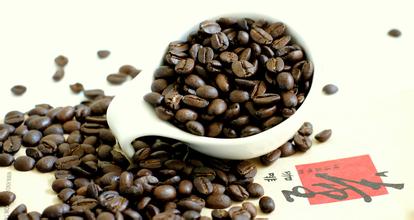
Grinding scale of Colombian Huilan Coffee Bean introduction to the description of taste and flavor in the producing area
The pure taste of Colombian coffee comes from Colombia's natural environment with the most favorable conditions for coffee growth. But beyond that, it is inseparable from the hard work of local growers. In Colombia, coffee cultivation has reached 1.07 million hectares, there are about 302000 coffee plantations in the country, and 30 to 40 per cent of the rural population depends directly on coffee production. Columby
Narrow leaf coffee Coffea stenophylla G. Don
Coffea stenophylla G. Don, Gen. Syst. 3: 581. 1834; A. Cheval. Op. Cit. 210; A. E. Haarer, op. Cit. 25; Hainan Flora 3: 348. 1974. Shrubs to small trees, 3-6 m tall, usually 1-3 m above ground before branching; old branches gray-white, with inflated nodes; young branches slender, compressed. Leaves thinly leathery, narrowly oblong or
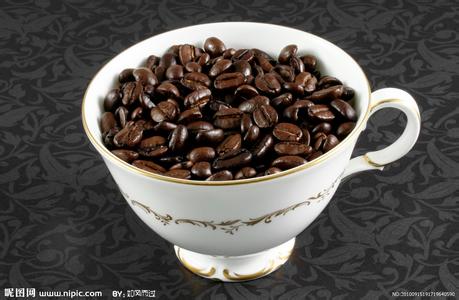
How long can the freshly baked espresso beans be stored? how long is the time to grow them?
How long the freshly baked espresso beans can be stored for several days because the beans are freshly roasted and the beans with medium and deep roasting degrees are more exuberant. When steaming, the carbon dioxide gas in the powder will be discharged after the hot water comes into contact with the coffee powder, causing the powder and powder to push and expand each other, forming the so-called hamburger state. Stale beans (above medium-deep baking degree), stewed

Colombia Coffee Boutique Coffee Flavor Taste Producing Area Features Manor Introduction
Colombia coffee is the first coffee produced in Medellin, both in terms of yield and texture. It is characterized by full coffee beans, rich nutrition, moderate acidity, good balance, rich aroma and soft and smooth taste. Apart from Medellin, Armenia and Manizales, the capital cities of two neighboring provinces in the south, are also famous coffee producing areas.

How long is the shelf life of coffee beans?
Q: Should coffee beans be stored in the refrigerator after opening? How to preserve it? A: As long as it is sealed and placed in a cool place at normal temperature. It is not recommended to put coffee in the refrigerator. If you put it in the refrigerator, when you want to drink coffee, take it in and out. The fresh-keeping temperature of coffee is unstable, but it leads to faster odor loss. What's more, coffee has deodorant function. This does not become a deodorant.

American black coffee not only American coffee Americano but also Long Black, Lungo, Ristretto
Although the United States is the first consumer of coffee, when it comes to authentic coffee, it must be no better than the Italians! After World War II, people came to Europe again, because they were not used to drinking local Espresso which was too strong, so some people drank Espresso and water, which became American American.
Colombian Coffee Flavor description Taste quality characteristics introduction of Brand Manor name
Colombian coffee beans: in 1808, a priest introduced coffee beans to Colombia for the first time from the French Antilles via Venezuela. One of them is that Colombia's first coffee seeds were imported from Venezuela through the province of Santander. Third: the earliest record of coffee cultivation in Colombia appeared in The Illustrated, a Spanish missionary named The Illustrated.

Introduction to the Variety characteristics of Coffee Flavor description in Colombia
Colombian coffee flavor description planting environment regional treatment variety characteristics Colombia is rich in products, especially coffee, flowers, gold and emeralds are known as the four treasures. In 1808, a priest introduced coffee to Colombia for the first time from the French Antilles via Venezuela. Today, the country is the second largest coffee producer after Brazil and the largest Arabica coffee in the world
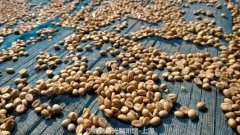
A brief introduction to the description of the flavor, taste and aroma characteristics of boutique coffee beans in Santa Rita Manor.
The main varieties of Colombian coffee are small grains of coffee. Plants are small trees or large shrubs, 5-8 m tall, usually much branched at base; old branches gray-white, nodes dilated, young branches glabrous, compressed. Leaves thinly leathery, ovate-lanceolate or lanceolate, 6-14 cm long and 3.5-5 cm wide, tip long acuminate, acuminate part 10-15 mm long, base cuneate or slightly obtuse, rarely rounded, entire or

A brief introduction to the History and Culture of the Origin and Development of Fine Coffee beans in Santa Rita Manor
The main varieties of Colombian coffee are small grains of coffee. Plants are small trees or large shrubs, 5-8 m tall, usually much branched at base; old branches gray-white, nodes dilated, young branches glabrous, compressed. Leaves thinly leathery, ovate-lanceolate or lanceolate, 6-14 cm long and 3.5-5 cm wide, tip long acuminate, acuminate part 10-15 mm long, base cuneate or slightly obtuse, rarely rounded, entire or

Boutique coffee Colombian coffee the latest coffee introduces a unique flavor
Colombian coffee (Cafe de Colombia), which originated in Colombia, is one of the few individual coffees sold in the world under the name of the country. In terms of quality, it has won praise unmatched by other coffee. Compared with other producing countries, Colombia is more concerned with developing products and promoting production. It is this, coupled with its superior geographical and climatic conditions, that makes Goran